An old bulb fails beside the reading chair, and the shelves offer several LEDs marked “60-watt equivalent.” Start with the brightness you liked, then compare color. Those are separate choices, and the Lighting Facts label lets you make each one deliberately.
Use lumens to match the amount of light
Lumens describe light output. Watts describe the electrical power a bulb uses. The Federal Trade Commission’s light bulb guide puts a traditional 60-watt incandescent bulb at about 800 lumens. If that lamp lit the page comfortably, look around 800 lumens as a starting point. If its shade made the book hard to read, try a sample in the actual lamp before ordering a whole set.
Compare color with the lamps switched on
The light appearance scale places warmer, more yellow-looking light toward the lower Kelvin values and cooler-looking light toward the higher ones. Two bulbs with the same lumen output can therefore give a wall or fabric a different appearance. Put your sample beside the adjoining lamp in the evening, when daylight is no longer masking the difference.
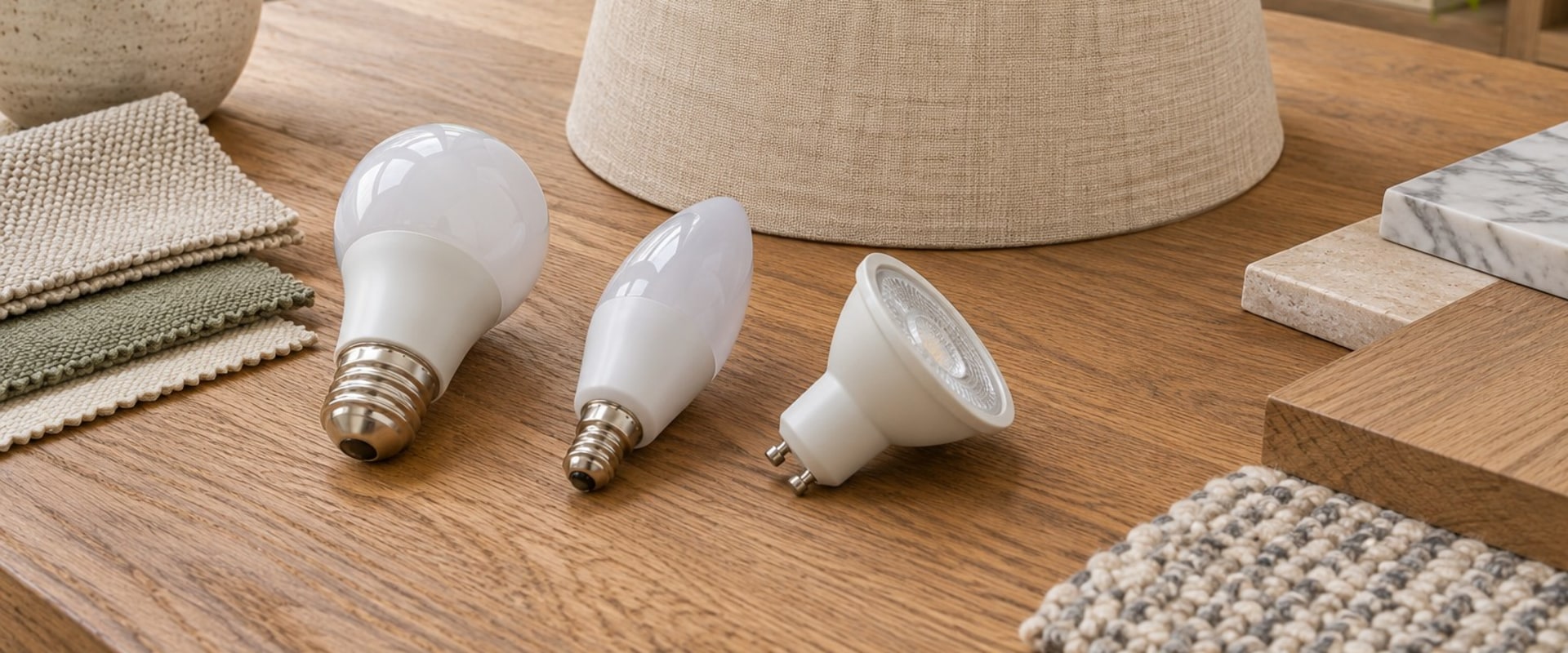
Check the bulb shape, base and manufacturer’s fixture restrictions before buying. If the lamp is on a dimmer, verify compatibility with the bulb and test the range you use. Keep the package or take a photo of the model number. When planning living room fixture placement, that small record makes it easier to match the second lamp to the first.


